Micronutrients in Prenatal Medicine
Micronutrients and dr.falcon graVita
A healthy, balanced diet is important in every phase of life – but it is of particular importance during pregnancy and breastfeeding. The expectant mother’s body is working at full capacity: it provides not only for itself but also supplies the growing life in the womb with all vital nutrients.
During this time, the developing child is completely dependent on the mother’s nutrient reserves – any undersupply can have a direct impact on its development. Therefore, a conscious, wholesome diet is the basis for a healthy pregnancy and the child’s healthy growth. Fresh fruit and vegetables, whole grain products, high-quality plant oils, dairy products, fish, and sufficient fluids contribute significantly to a good supply. The results report of the National Consumption Study II (NVS II) in Germany confirms that women in Central Europe are severely undersupplied with certain micronutrients, such as folate (86%), iodine (97%), iron (75%), calcium (55%), vitamin D (91%), vitamin E (48%), zinc, selenium, and omega-3 fatty acids.
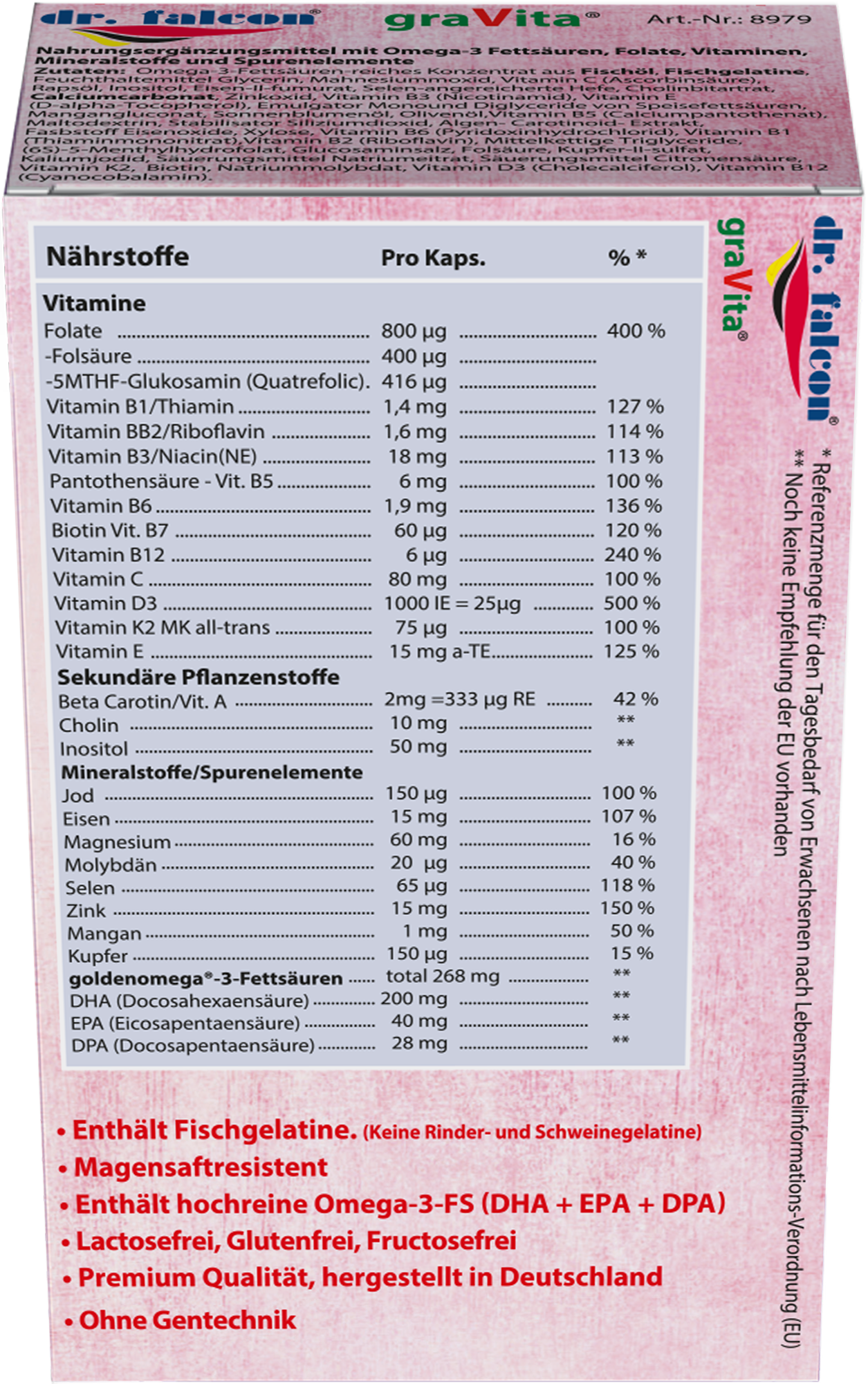
This is precisely where dr.falcon® graVita® comes in: Developed by nutritionists and medical specialists according to the latest scientific findings, the preparation has been specifically tailored to the particular needs of women planning a pregnancy, as well as pregnant and breastfeeding women. The balanced combination of folate/folic acid, omega-3 fatty acids, iodine, vitamins, minerals, trace elements, and phytonutrients provides optimal support for mother and child in all phases – from conception to the end of the breastfeeding period. Below you will find an overview of the most important micronutrients in prenatal medicine and their significance for the developing life.
Folate – crucial from the desire to conceive
Folate belongs to the B-vitamin family and is one of the most important micronutrients for the creation of new life. Adequate folate intake – ideally at least four weeks before pregnancy occurs – is essential to prevent miscarriages, preeclampsia, malformations, and growth disorders. Folate supports cell division, blood formation, the development of the central nervous system, and immune system function. Since approximately 50% of women cannot utilize folic acid, or only partially, due to a genetically determined enzyme activity, it should be supplemented in the form of bioactive L-methylfolate. The combination of L-methylfolate and folic acid in dr.falcon® graVita® (equivalent to 800 µg of dietary folate) ensures optimal folate supply.
Calcium, Vitamin D, Vitamin K2, and Magnesium
These four micronutrients form an unbeatable team. They work together so closely in the body that a deficiency in one nutrient often blocks the effect of the others. Especially in the phases from the desire to conceive through pregnancy to breastfeeding, this combination is crucial for bones, muscles, and hormonal balance.
The “Bone Quartet”: How they work together
-
Calcium is the building block for bones and teeth and plays an important role in muscle function and milk production.
-
Vitamin D3: It ensures that calcium is absorbed from the intestine into the blood in the first place. Vitamin D supports calcium metabolism, cell division, and the development of the child’s skeleton and immune system.
-
Vitamin K2 (ideally as MK-7) is the guide. It activates proteins (such as osteocalcin) that transport calcium from the blood directly into bones and teeth – while simultaneously preventing it from depositing in the arteries. A deficiency of vitamins D and K2 during pregnancy can lead to reduced bone mineralization in the newborn.
-
Magnesium is the regulator. It activates vitamin D and ensures that the muscles (including the uterus) can relax, while calcium is responsible for contraction.
The phases in detail
1. Desire to conceive: In this phase, the goal is to replenish the mother’s stores and create optimal conditions for implantation.
-
Vitamin D & K2: Strictly speaking, vitamin D is a hormone precursor and is important for egg maturation and the build-up of the uterine lining. K2 supports vascular health.
-
Magnesium: Helps reduce stress (stress reduces fertility) and regulates the hormonal balance.
-
Calcium: A balanced calcium level is important, as the sperm triggers a calcium influx into the egg during fertilization to start cell division.
2. Pregnancy: Especially from the second trimester onwards, the baby starts building its skeleton.
-
Calcium: If the increased demand is not met, the body withdraws calcium from the mother’s bones and teeth – which increases the long-term risk of osteoporosis.
-
Magnesium: Extremely important to avoid calf cramps in the mother and premature contractions. Magnesium relaxes the smooth muscles of the uterus.
-
Vitamin D3 & K2: Ensure that all calcium is properly utilized. A good vitamin D level in the mother protects the newborn from deficiency in the first months of life.
3. Breastfeeding: Through breast milk, the mother passes large amounts of nutrients to the baby daily.
-
Calcium & Magnesium: Calcium and magnesium requirements are often even higher during breastfeeding than during pregnancy. Breastfeeding mothers temporarily lose some bone mass, which rebuilds after weaning – provided the nutrient supply is adequate.
-
Vitamin D: Breast milk naturally contains relatively little vitamin D. Therefore, the mother supplements primarily for her own health (and the baby receives its own vitamin D drops directly).
Since vitamin D only works optimally in combination with vitamin K2 and magnesium, dr.falcon® graVita® contains them in a synergistic dosage.
Vitamin K2 (Menaquinone)
Vitamin K2 is the activated form of vitamin K and fulfills numerous important functions:
-
supports the child’s bone and tooth development
-
protects the mother against osteoporosis
-
regulates blood clotting
-
works together with vitamin D3 to protect the heart and blood vessels. Only the bioactive all-trans form of vitamin K2 MK7 is optimally utilized by the body.
Omega-3 Fatty Acids
Omega-3 fatty acids – above all DHA (docosahexaenoic acid) and EPA (eicosapentaenoic acid) – are among the most important building blocks for a healthy life. Since our body can hardly produce them itself, we must obtain them through food. From the first thought of having a baby to weaning, these healthy fats play an absolutely key role.
1. Desire to conceive: Laying the foundation. Before pregnancy even occurs, omega-3 fatty acids support the body at the cellular level. They improve blood circulation in the uterus and ensure a healthy lining, which can facilitate implantation of the egg. In addition, they have a regulating effect on the hormonal balance and reduce silent inflammation in the body, which favors general fertility. They are also important for men: Omega-3 is a main component of the sperm membrane and improves their shape and mobility.
2. Pregnancy: Building material for the brain. As soon as you are pregnant, the baby virtually draws omega-3 reserves from your body. Development of the fetal nervous system runs at full speed, especially in the last trimester.
-
Brain and eye development: DHA is a main structural component of the brain and retina. Good intake promotes the child’s cognitive abilities and visual acuity.
-
Protection against preterm birth: Studies show that sufficient intake of EPA and DHA can significantly lower the risk of preterm birth (before the 34th week).
-
Maternal well-being: If the baby empties maternal depots, this can lead to a deficiency in the mother. Omega-3 supports the mother’s neuronal balance and can help reduce the risk of postpartum depression.
3. Breastfeeding: The supply continues. After birth, the baby’s brain is far from fully developed. In the first months of life, it continues to grow rapidly. Through breast milk, you pass on exactly the amount of DHA that you have in your own blood. If you eat an omega-3-rich diet, your breastfed baby benefits directly, which is important for their concentration, motor skills, and later language development.
How much is recommended and what does it contain?
The German Nutrition Society (DGE) recommends that pregnant and breastfeeding women consume at least 200 mg of DHA daily. To meet this requirement, various sources are available:
-
Fatty sea fish: Salmon, mackerel, or herring are excellent suppliers of omega-3 fatty acids. When consuming these fish, pregnant women should pay attention to potential heavy metal contamination.
dr.falcon® graVita® contains tasteless and odorless, high-purity, heavy-metal-free omega-3 fatty acids produced by a renowned manufacturer.
Iodine
Iodine is an absolutely central building block in the phases of conception, pregnancy, and breastfeeding, as it is the basic substance for the formation of thyroid hormones. These hormones significantly control the development of the brain and nervous system in the unborn child and infant. Since Germany and large parts of Central Europe are considered iodine-deficient areas, intake through normal food is usually not sufficient during these phases of life.
Why is iodine so important?
-
Desire to conceive: A well-functioning thyroid in the mother is a prerequisite for a regular cycle and ovulation, and it increases the chance of fertilization.
-
Pregnancy: From the 10th to 12th week of pregnancy, the baby begins to develop its own thyroid, but is completely dependent on the mother’s iodine intake until then and remains strongly dependent afterwards. A deficiency can increase the risk of miscarriage and impair the child’s mental and physical development.
-
Breastfeeding: Iodine demand is highest now because the baby is supplied exclusively via breast milk.
Recommended iodine intake & dietary supplementation
The German Nutrition Society (DGE) recommends an additional daily intake of 150 µg of iodine for pregnant and breastfeeding women, which can hardly be covered by a normal diet. Therefore, targeted supplementation is generally recommended.
Important exception: If you have a thyroid disorder (such as an overactive thyroid or autoimmune diseases like Hashimoto’s thyroiditis), you should definitely consult your doctor before taking iodine.
Iron
Iron requirements double during pregnancy and breastfeeding. Even with a balanced diet, intake can be insufficient. Iron is the main component of red blood cells and is therefore essential for oxygen transport as well as a healthy immune system.
Other vitamins and trace elements
-
Vitamin E: strengthens the immune system, protects cells from oxidative stress, supports muscles, connective tissue, and blood vessels.
-
Vitamin B1 (Thiamine): important for nerves, heart, digestion, and carbohydrate metabolism.
-
Vitamin B2 (Riboflavin): supports skin, hair, nails, vision, and energy balance.
-
Vitamin B6 (Pyridoxine): strengthens immune defense, nerves, heart, and muscles; supports skin elasticity and connective tissue.
-
Vitamin B12 (Cyanocobalamin): central for cell division, blood formation, nerve function, and psychological well-being.
-
Vitamin B3 (Niacin), B5 (Pantothenic acid), and B7 (Biotin): important for energy production, skin, hair, and tissue.
-
Vitamins B2, B6, and B12: help against pregnancy-related fatigue.
-
Vitamin C: strengthens the immune system and protects cells from oxidative stress.
-
Beta-carotene: supports growth and eyesight.
-
Zinc: contributes to fertility, cell division, and bone development. Zinc is important for maintaining healthy skin, hair, and nails.
-
Selenium: protects cells from free radicals and supports the immune system.
-
Manganese: important for bone formation, energy balance, and connective tissue.
-
Chromium: contributes to normal metabolism of macronutrients (carbohydrates, proteins, fats) and helps maintain normal blood sugar levels.
-
Copper: strengthens the immune system and supports pigment formation and connective tissue.
dr.falcon® graVita® offers comprehensive, scientifically sound support with all essential micronutrients – from the desire to conceive through pregnancy to the breastfeeding period.
Multiple micronutrient supplementation during pregnancy – WHO